

For this blog, we will cover the Fifine K688 mic—an affordable dynamic microphone gaining traction among voice talent. One of the reliable mics that I use and cherish is the SM7b. Is it worth replacing with the K688? I will dissect K688 and compare it to the SM7b to see which is more reliable and better for voice actors like me, and for mics in general. Let’s determine which is better overall: the K688 or the SM7b? Let’s unbox the K688 to find out.
DISCLAIMER: Everything I say in this blog are my thoughts only.
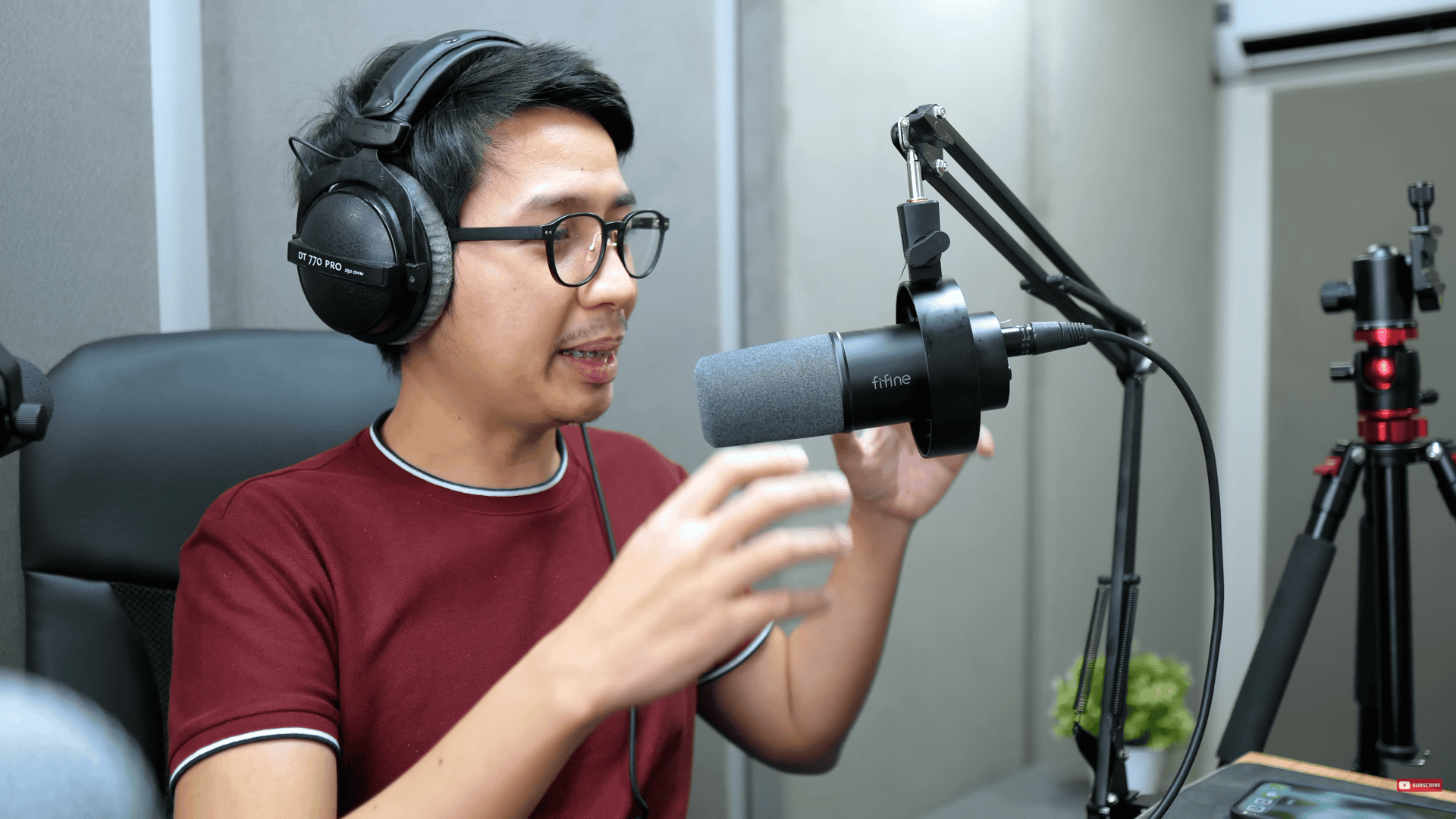
The Fifine K688 in action
Unboxing
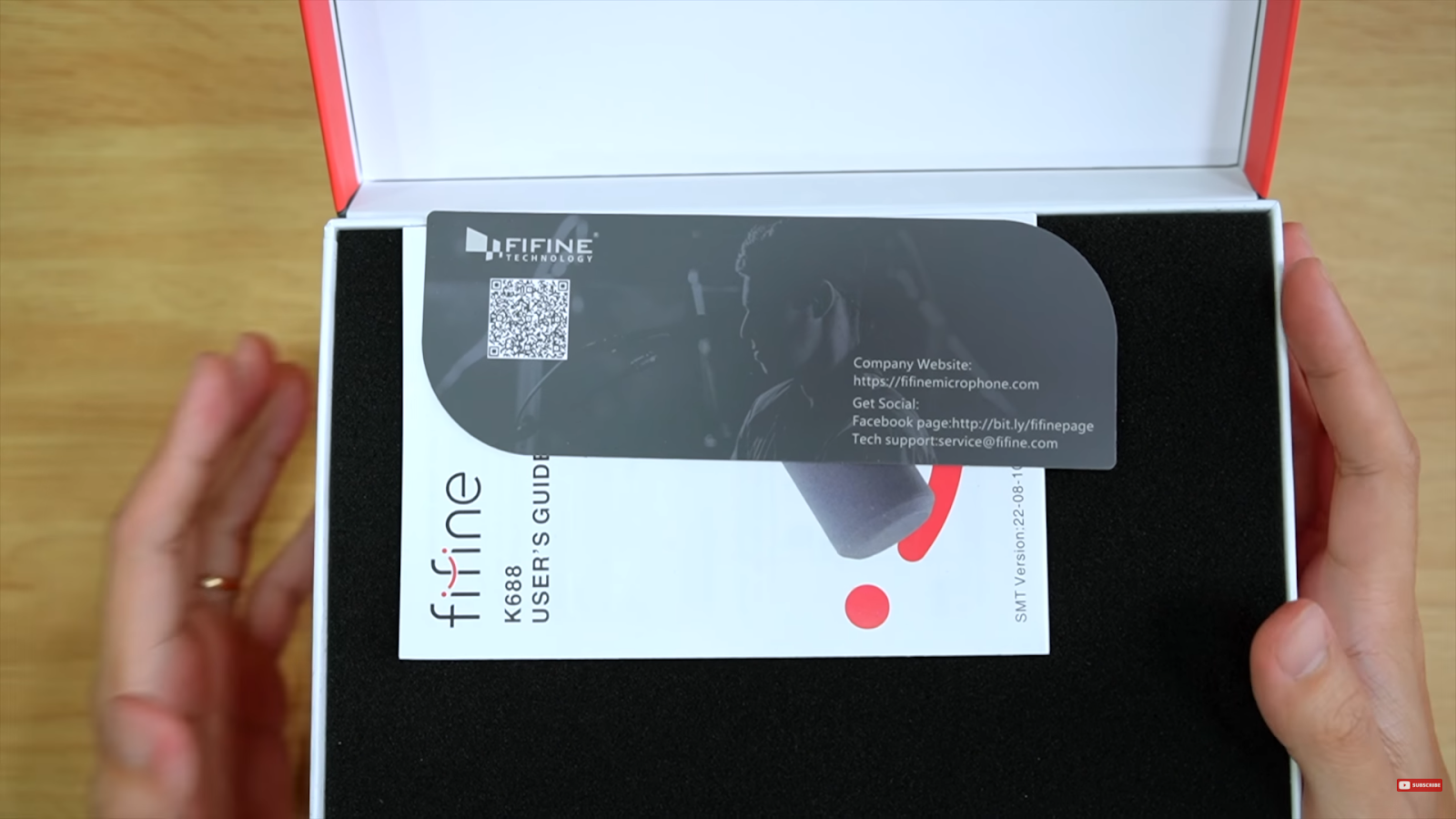
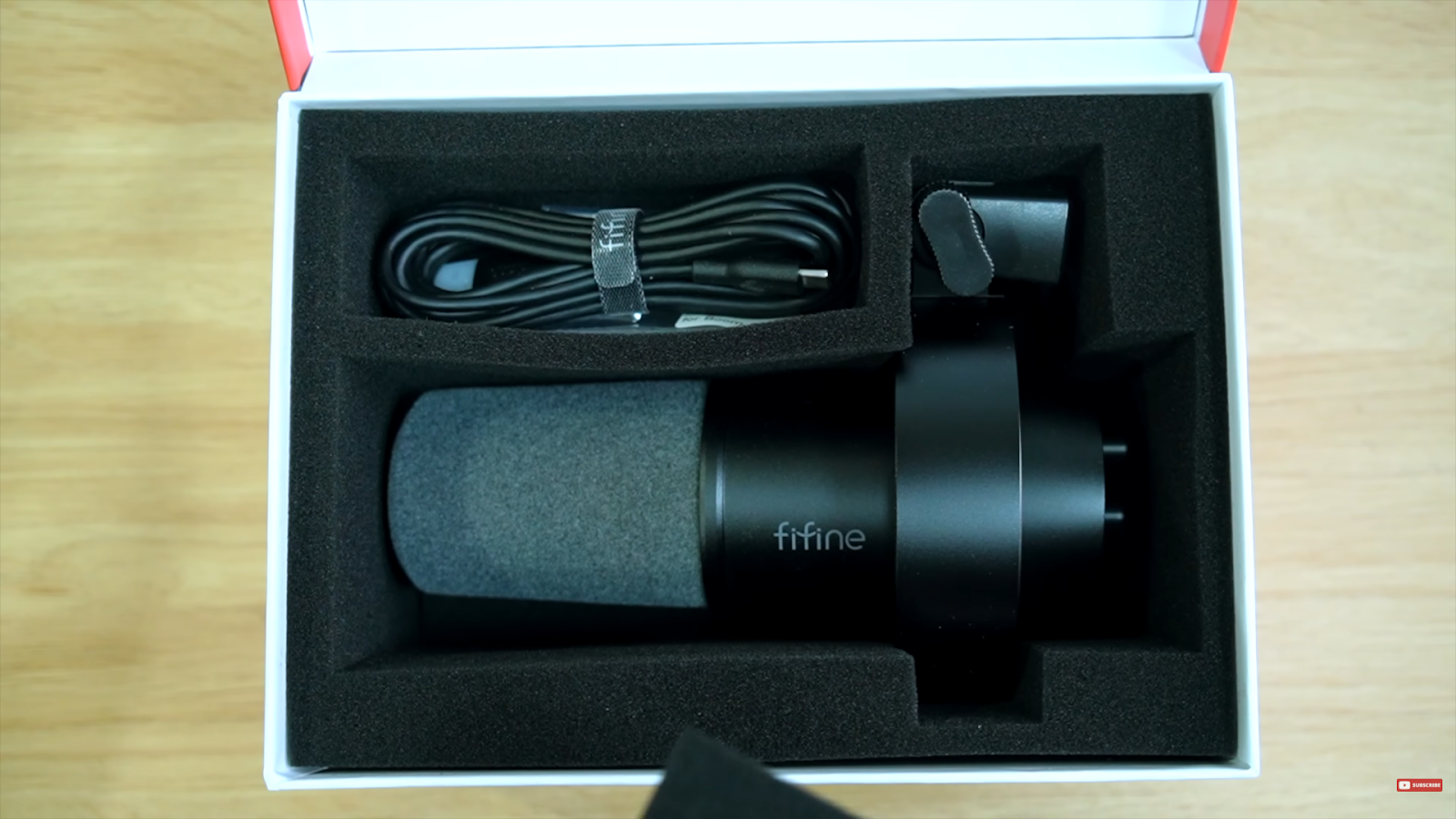
Fifine is really upping their mic game. From the packaging, with velvety textured foam in the box, to a 3/8 inch to 5/8 inch adapter for a boom arm with a sticker that conveniently spelled it out. It feels premium, and they are probably making a statement especially since this is their first XLR dynamic microphone.
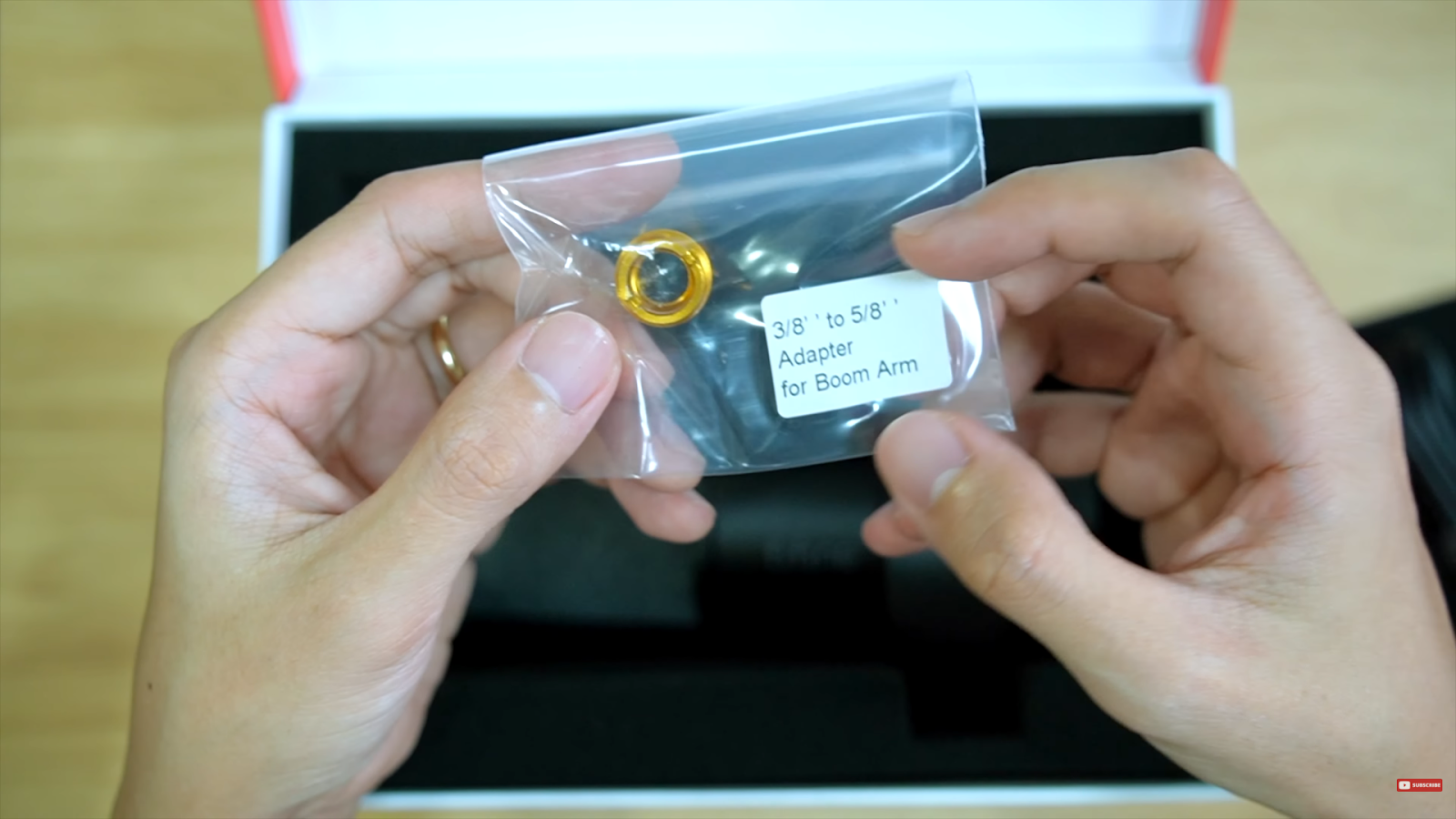
The 3/8 inch to 5/8 inch adapter for a boom arm
Now for the microphone itself. The K688’s velvety foam is so satisfying and reminiscent of the velvet ear pad cups that come with the DT770 pros, but I’d say the K688’s foam is more satisfying. Not just the foam, but the mic overall feels premium.
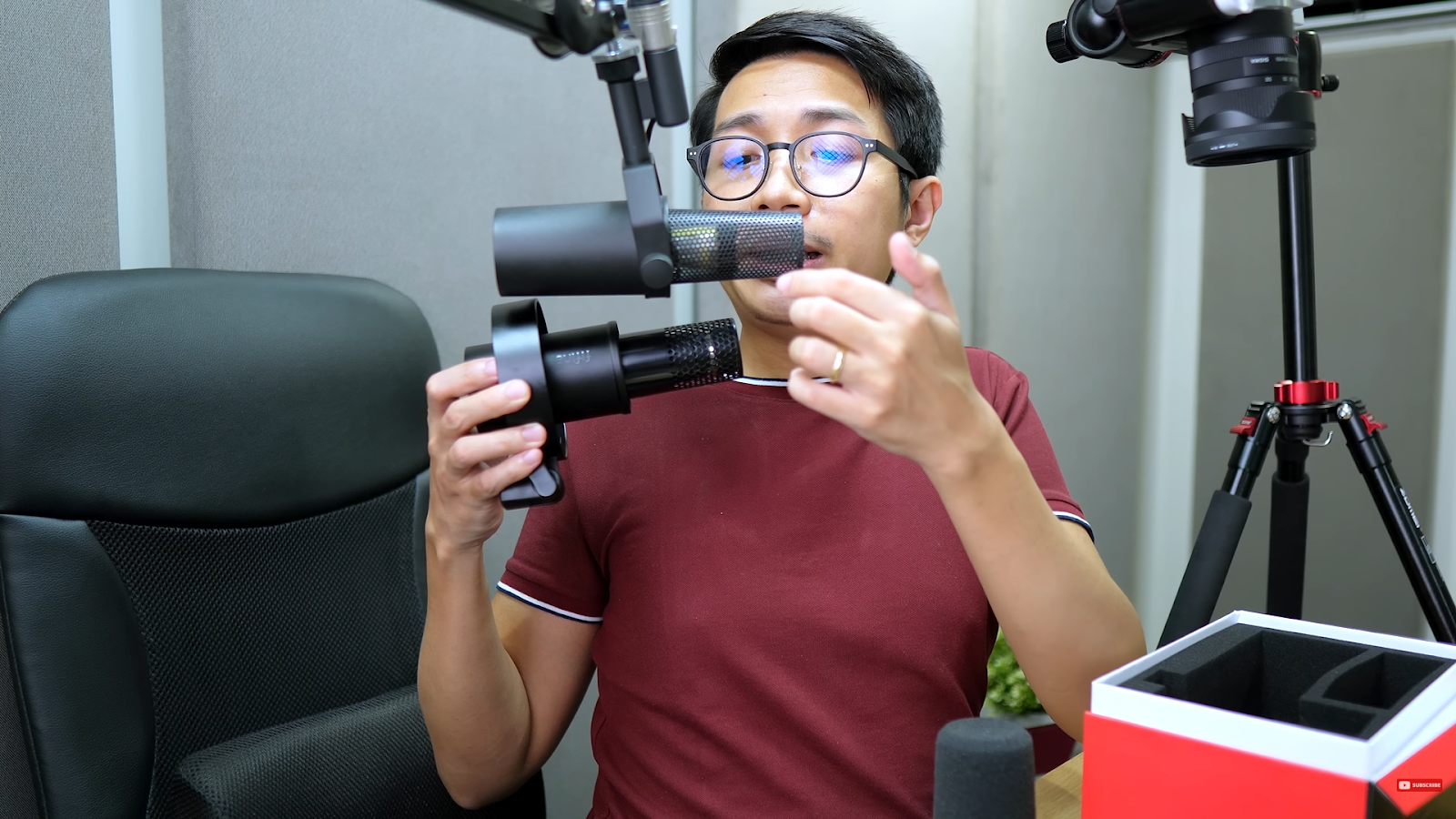
Regarding the weight of the mic, I’d say it’s not heavy at all. The K688 looks like an SM7b clone in terms of design language, and side by side, it’s just a little shorter. Despite that, the SM7b weighs so much more; I’d say this is about a third of the weight of this, maybe a quarter of it, just by estimation.
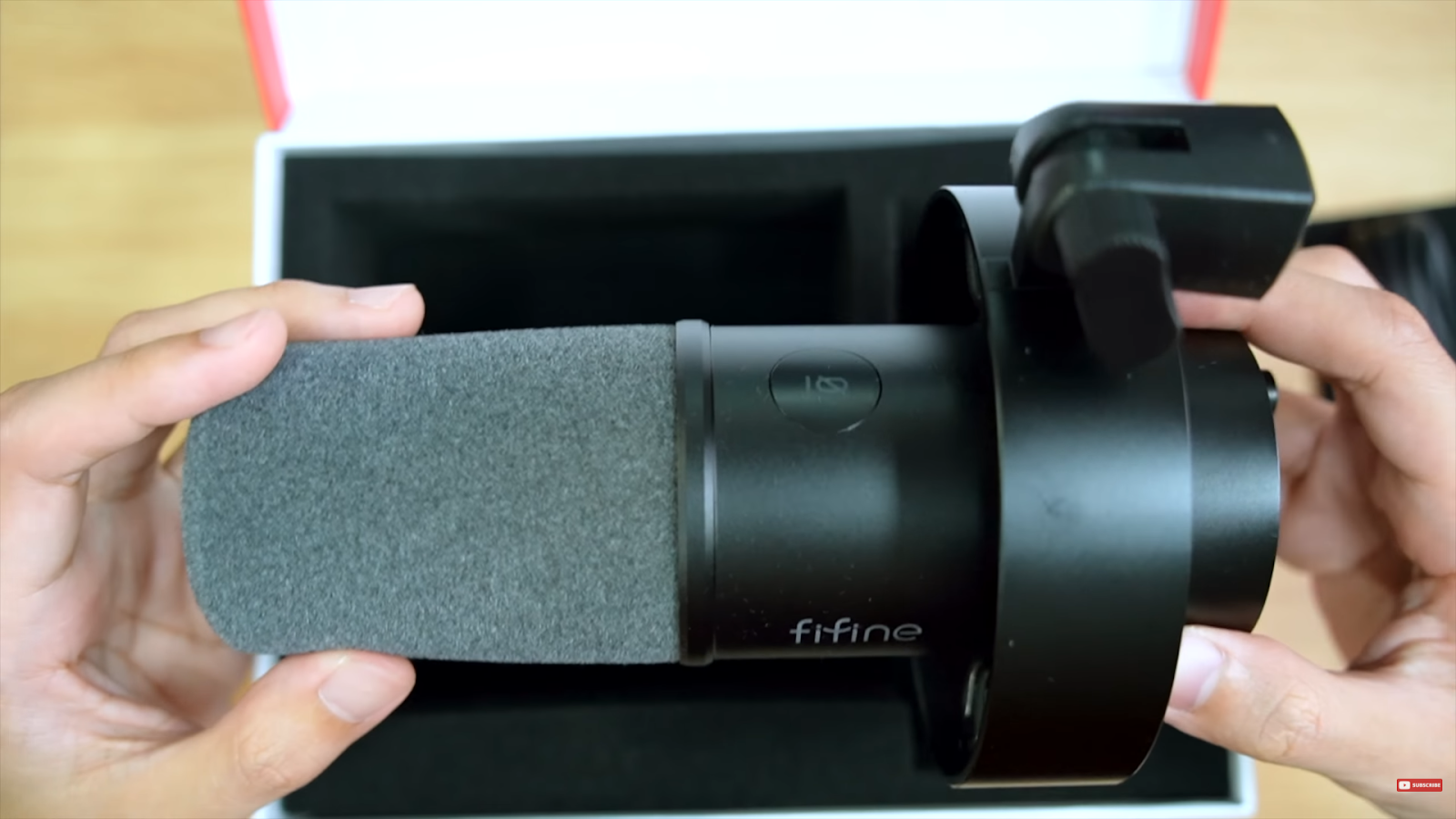
I am digging K688’s metallic shock mount. Compared to Ampligame A8’s mount, which was plasticky and rubbery, K688’s mount is some kind of light metal, but it doesn’t feel cheap. It’s light, but it’s heavy enough to be at that point where it feels sturdy. The mount itself seems to be made of the same quality as the A6V and A8.
Loving the sleek look of the Fifine K688? Grab yours now—click the link below to purchase:
https://link.davesoltura.com/fifinek688
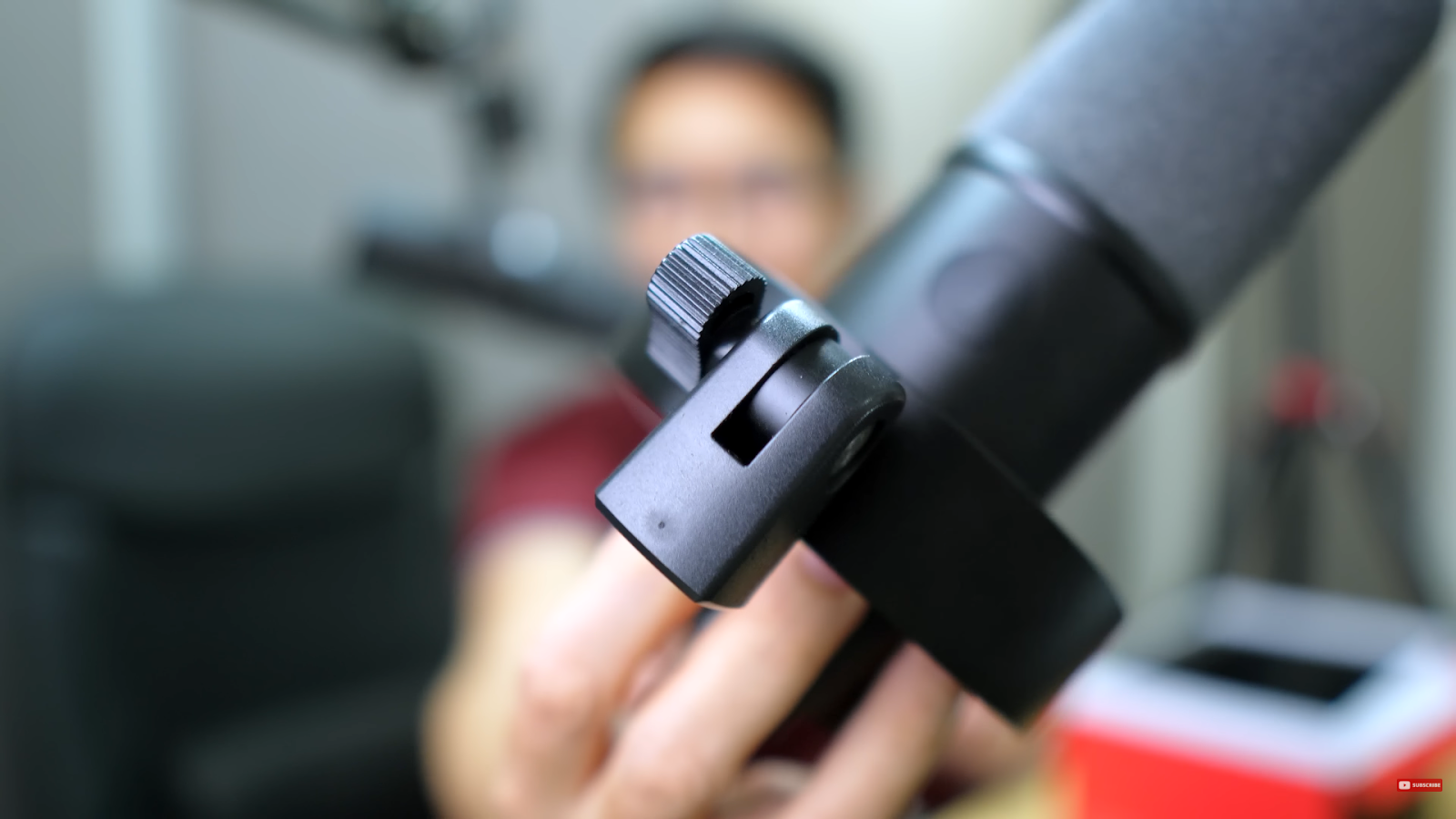
The metallic shock mount of the K688
At the bottom of the mic, we have the controls. There we can find the XLR Port, the USB-C, the earphone monitor jack, also a gain knob.
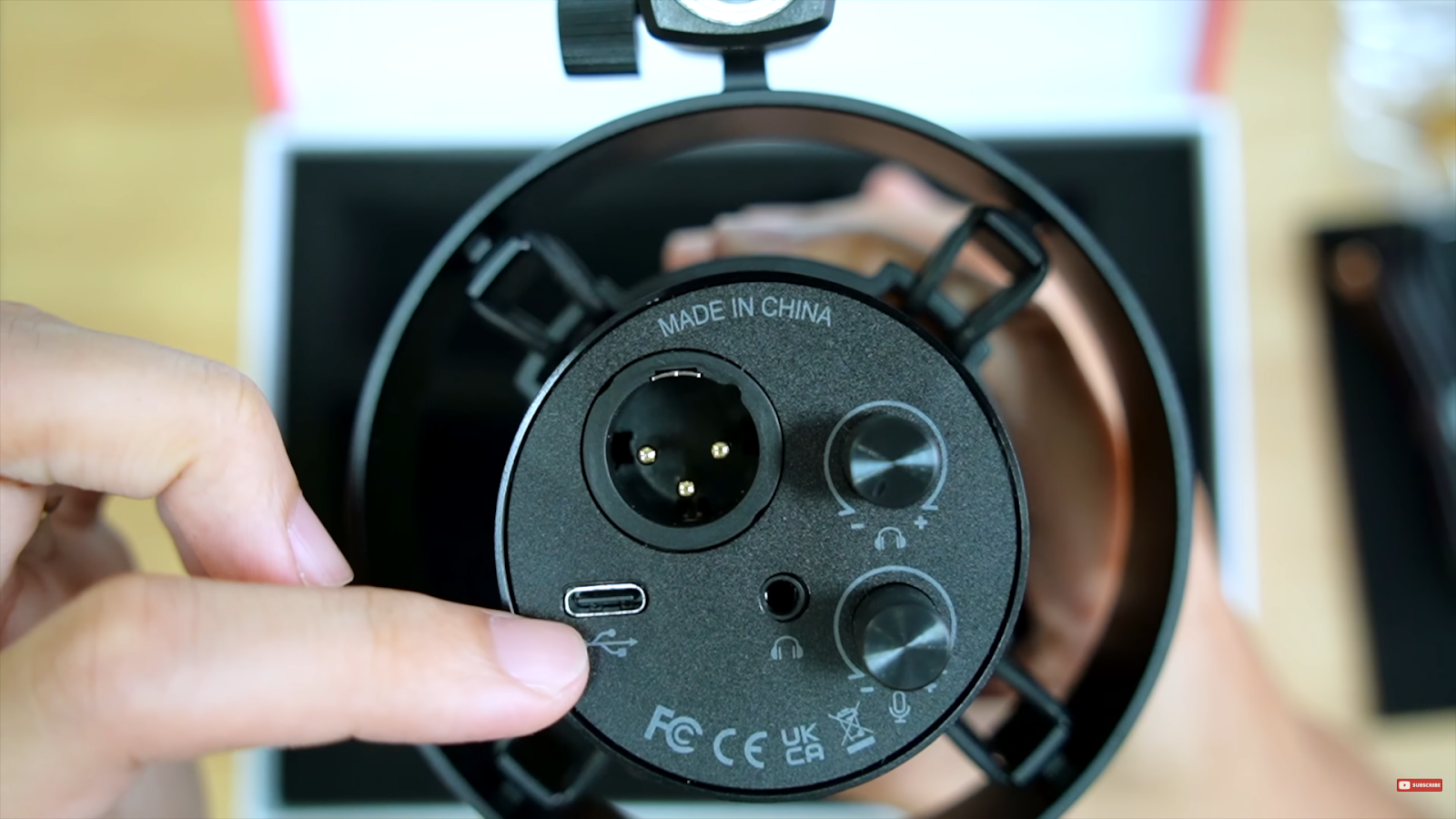
Bottom of the mic with the controls
Removing the foam of the mic, with the SM7b it has plastic ring while the K688 has no plastic ring.
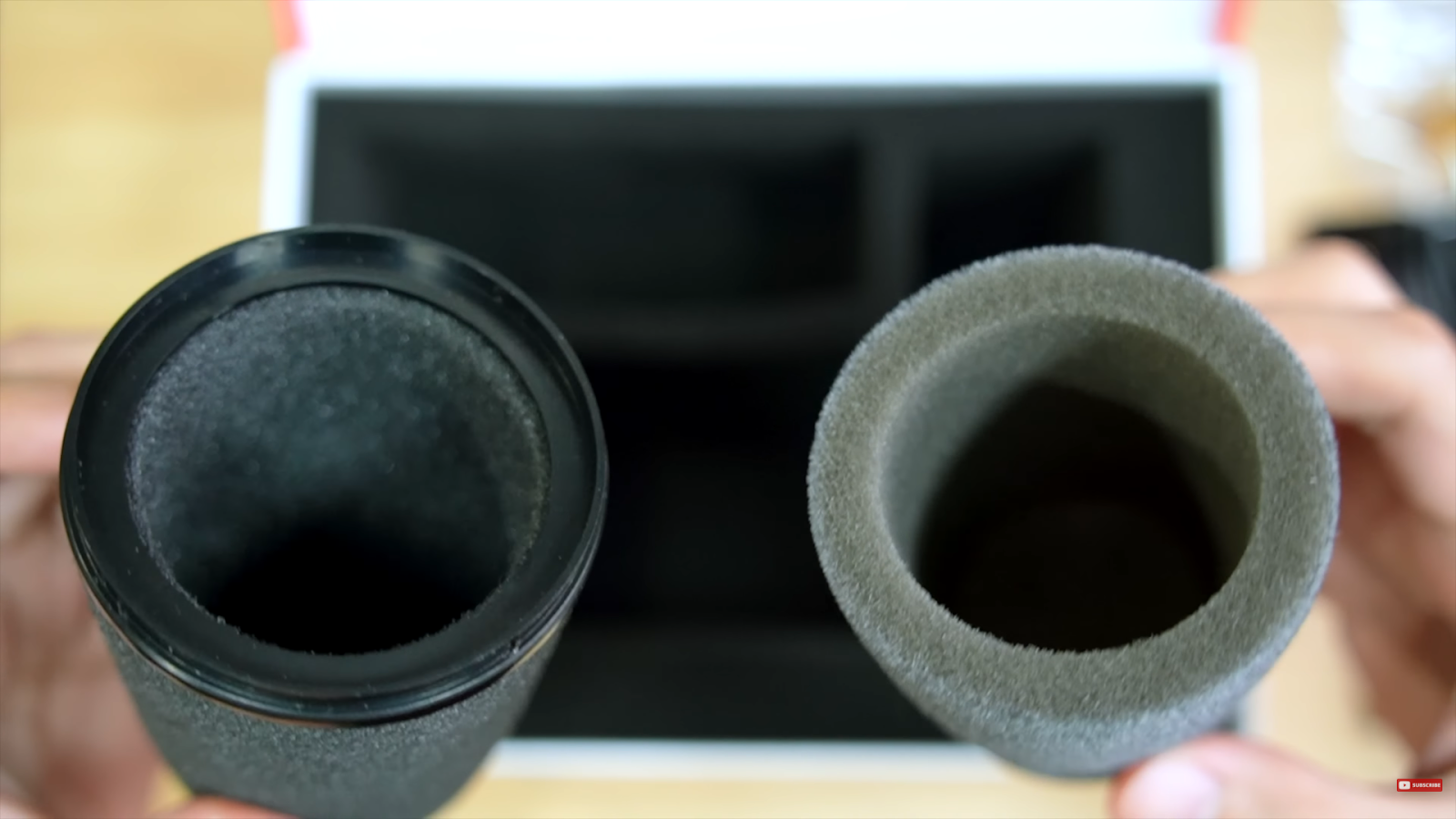
SM7b’s foam on the left and K688’s foam on the right
It’s an interesting that you can actually see that the SM7b’s diaphragm or capsule is recessed over here and this is just air, whereas on the K688 it’s practically at the tip.
To get a sense of how light the K688 is, I’ve attach it to a cheap boom arm. So we used the 3/8 inch to 5/8 inch shred adapters that came with it and I placed it into the mount, and then the USBC cable into the back of the mic. After that, a green light lit up, and that is the mute button.
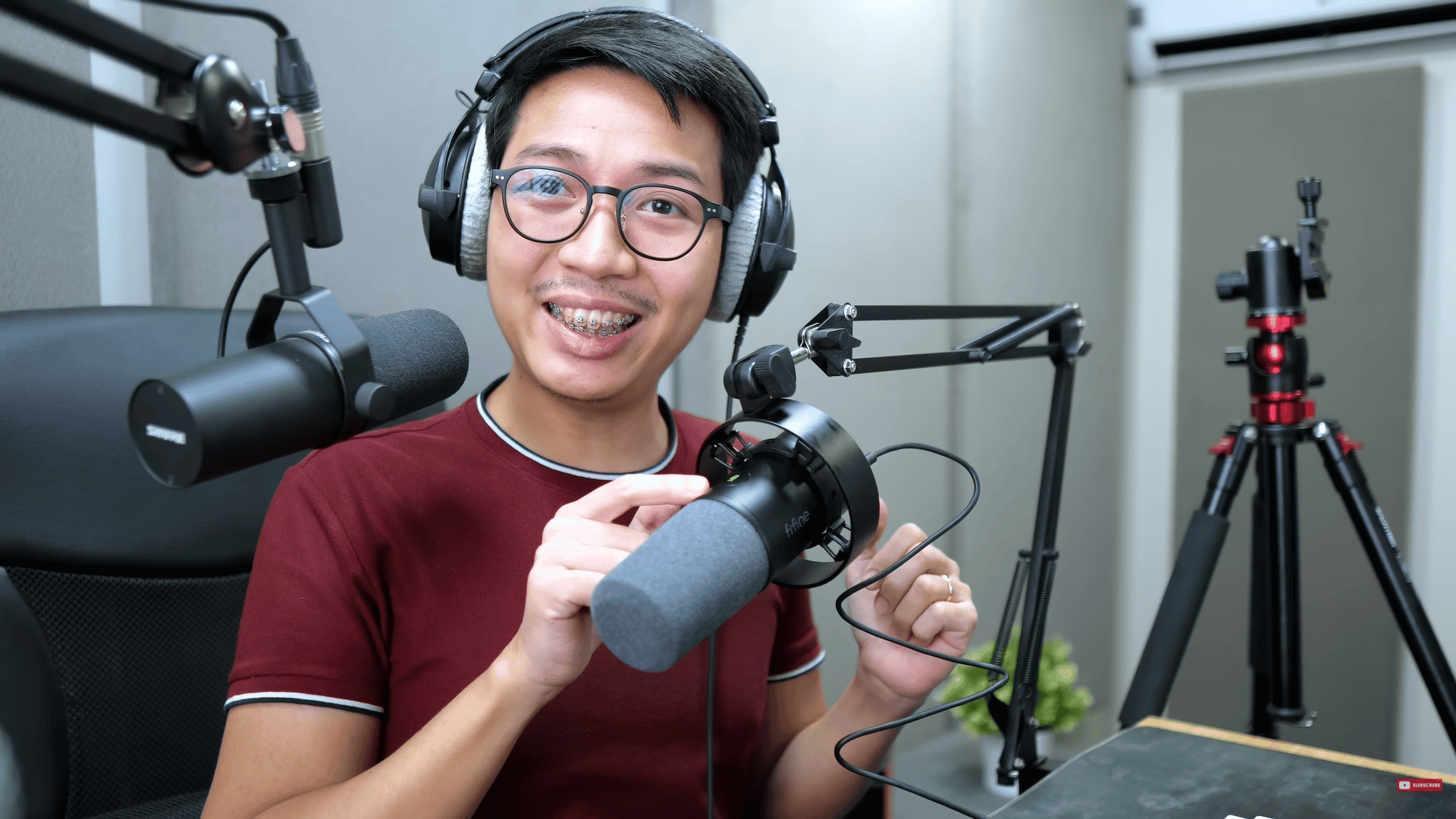
Me pointing to the green light
First Look & Impressions
Now for my first impression on the mic. When I first used the Fifine K688, I plugged it into my MOTU M2 audio interface via the XLR Jack. The reason is that the USB-C Jack just didn’t work out. I don’t know what happened. I switched cables three times, I plugged it into different ports, and I made sure I wasn’t plugging it into a hub so that it would be fully powered, but it just didn’t work out. I already turned my software on and off, reset my computer, changed my inputs and outputs, matched my sample rates, and all these things but it just wouldn’t get fixed.
The irony here is that Fifine is known for their USB mics, and this is their first ever XLR mic, and this is the first time I’ve used one of their products where the USB-C is not working. Unfortunately, this is not the unboxing that I hoped to make but I have to be very honest.
A positive thing about the mic is that the XLR sounds pretty good. I’d say it sounds just like how it looks, meaning it sounds velvety is the way I’d describe it. If you get up close, you can really engage that low end a bit.
I guess to my ears it’s a little lacking in mid-range punch. It’s like they added some low end, and you got some clarity in the highs, but it’s a little hollow in the middle.
Now, if we were to compare that to the SM7b, I’d say the SM7b still sounds a bit larger than life, as you would expect of it. With Fifine, it has some presence, but it sounds hollow in the middle. I actually like that because then this does not become an SM7b clone, but rather an SM7b alternative, at least for streamers and podcasters.
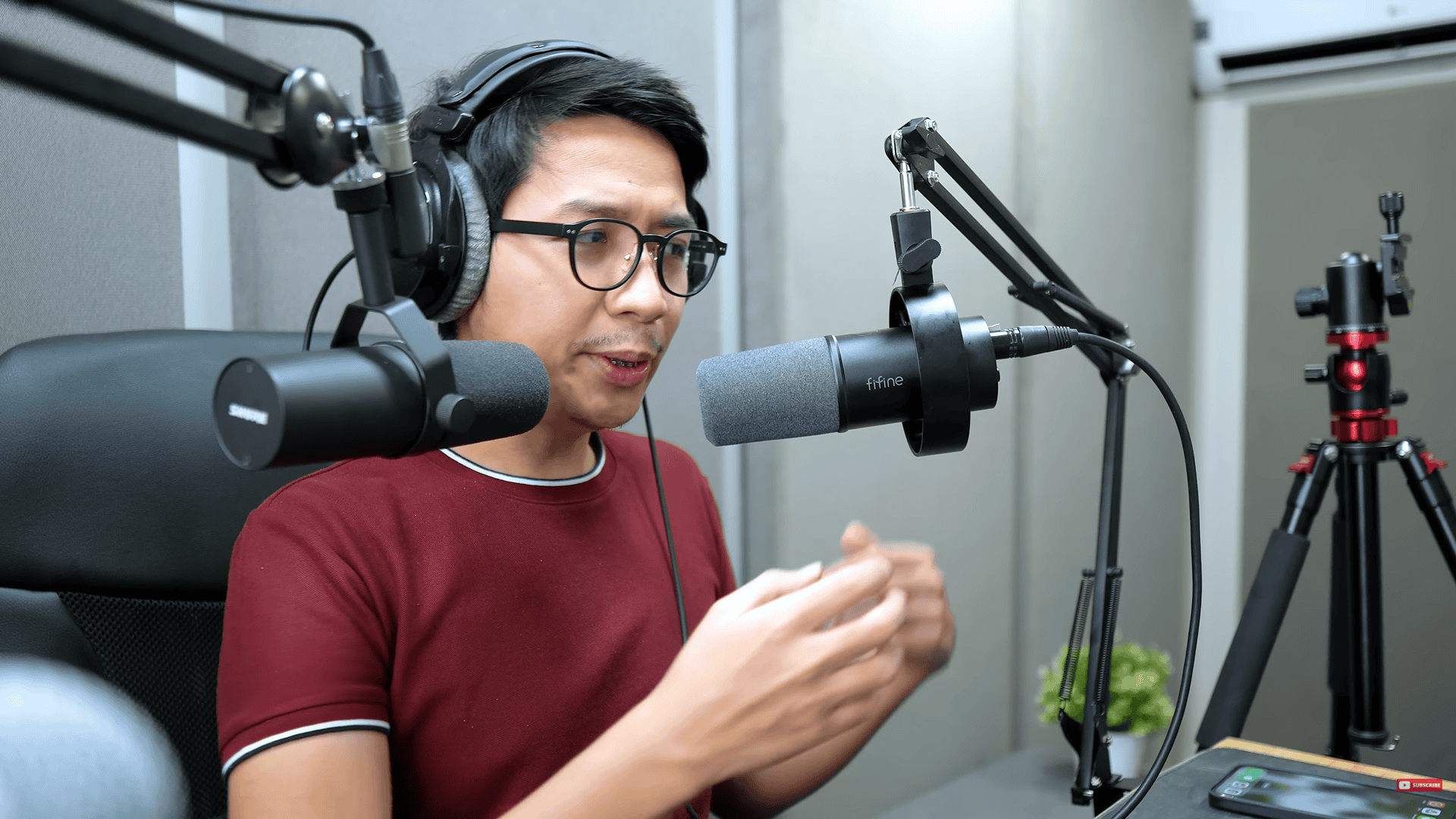
Comparing the two microphones: Fifine K688 (right) and SM7b (left).”
The difference here is that the K688 doesn’t require as much gain as the SM7b. The SM7b is cranked up to like three o’clock, whereas the K688 is right there at about 1:00 or 1:30, which is excellent because even though the USB-C isn’t working on this particular model, that means the mic itself is going to save you from getting one of those gain booster things. A Cloudlifter isn’t needed to power this up.
Conclusion
Overall, I think the Fifine K688 is still a great value proposition for the price compared to something like the Audio Technica AT2040. The K688 is a clear-sounding microphone; it’s not as gain-hungry as the SM7b, so you can actually get a better sound out of this if you are using cheaper gear.
If you use a more high-end interface, then it becomes a little bit more subjective and I’m pretty sure a lot of you are just looking at this mic because of how it looks.
The fact that this mic is light without feeling cheap is actually a feature and not a limitation because you can use it with these cheap boom arms without having to buy one of these rode PSA ones which are really expensive.
Even if the USBC doesn’t work and you’re just getting an XLR mic, this is a creative value proposition. You get the SM7b look, without the SM7b price tag. It’s light, so you don’t have to buy an expensive boom arm, and you don’t need a cloud lifter because it’s got enough preamp gain inside. If those things matter to you and you don’t need the exact sonic profile of the SM7b, then go ahead and get this mic.
If you think the Fifine K688 suits your needs, then click the link below to purchase: