

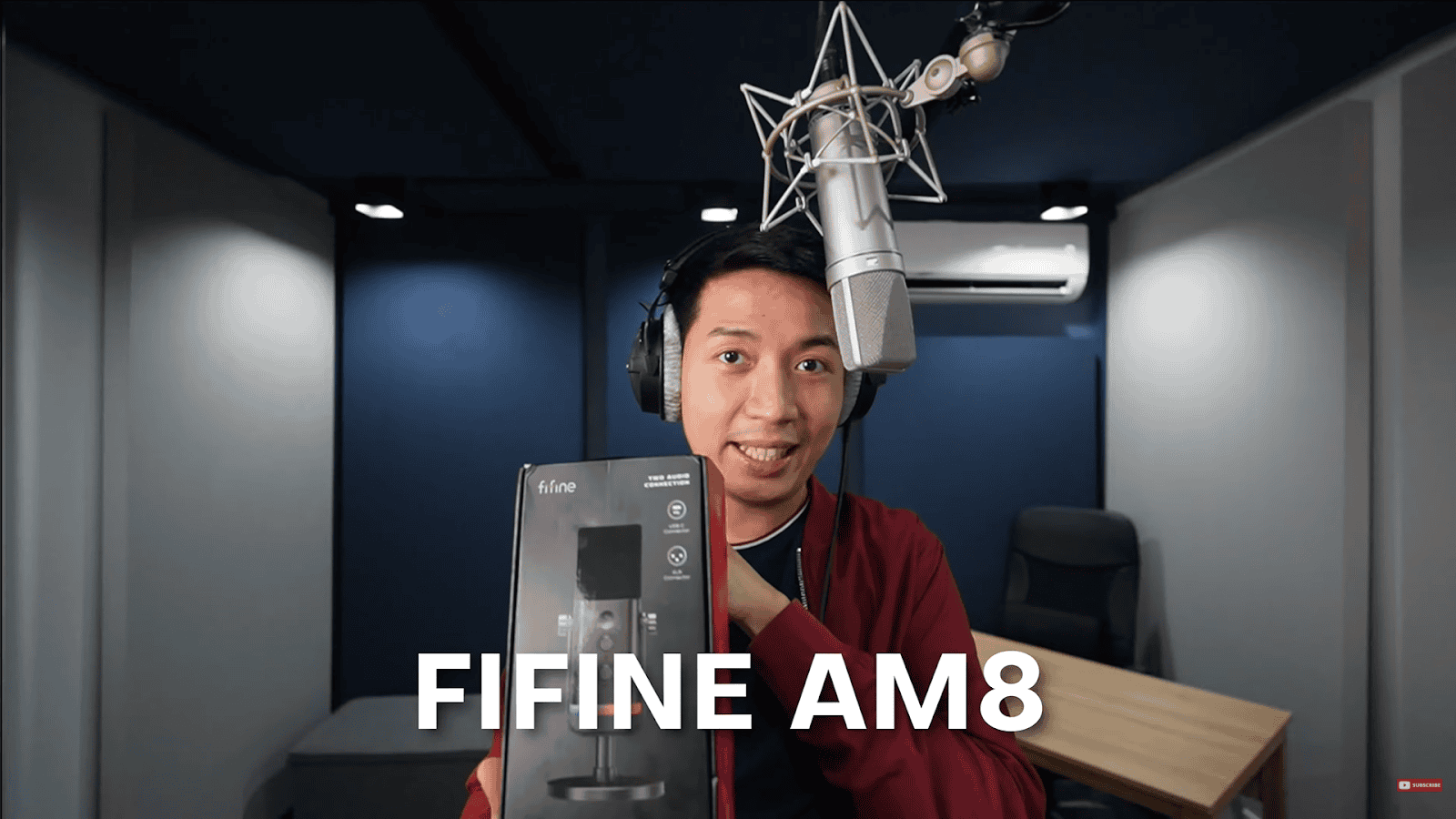
Fifine is pushing the boundaries of what you can achieve with a budget mic. They’ve previously done that with several mics, and for this blog, we will look at the Fifine AM8.
They’re calling the Fifine AM8 a streaming microphone just like its predecessors, which are the K658 and the K688.
The AmplIgame line is marketed towards streamers and gamers, which begs the question: What value does the Fifine AM8 bring that the other mics don’t already? There’s only one way to find out. Let the unboxing begin.
Unboxing
The Fifine AM8 is a snazzy-looking microphone. The foam is velvety in terms of color, and it might be their best foam yet. In terms of texture, it is quite similar to the K658, but I think the AM8 has an edge because the foam is thicker.
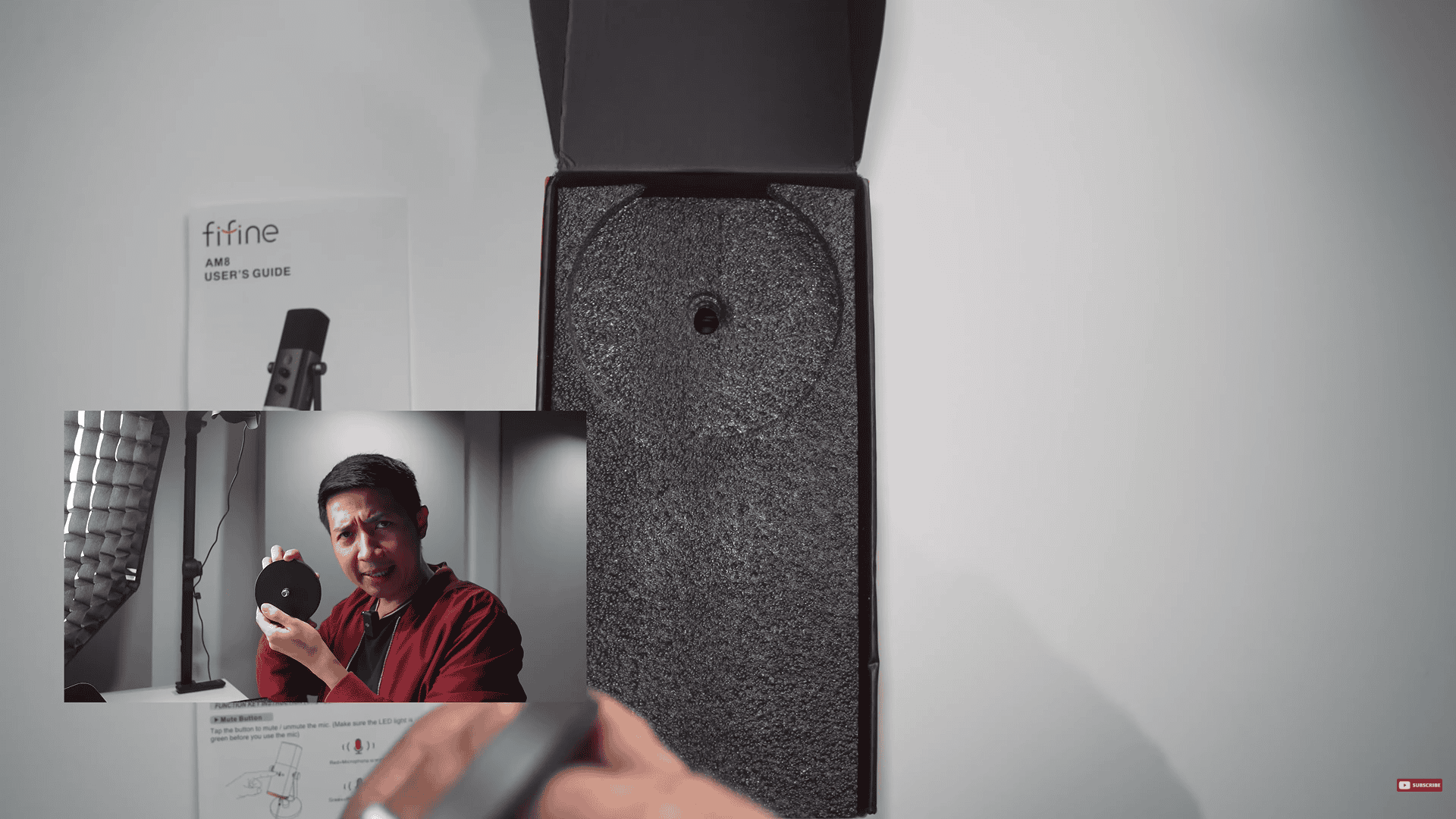
The base of Fifine AM8
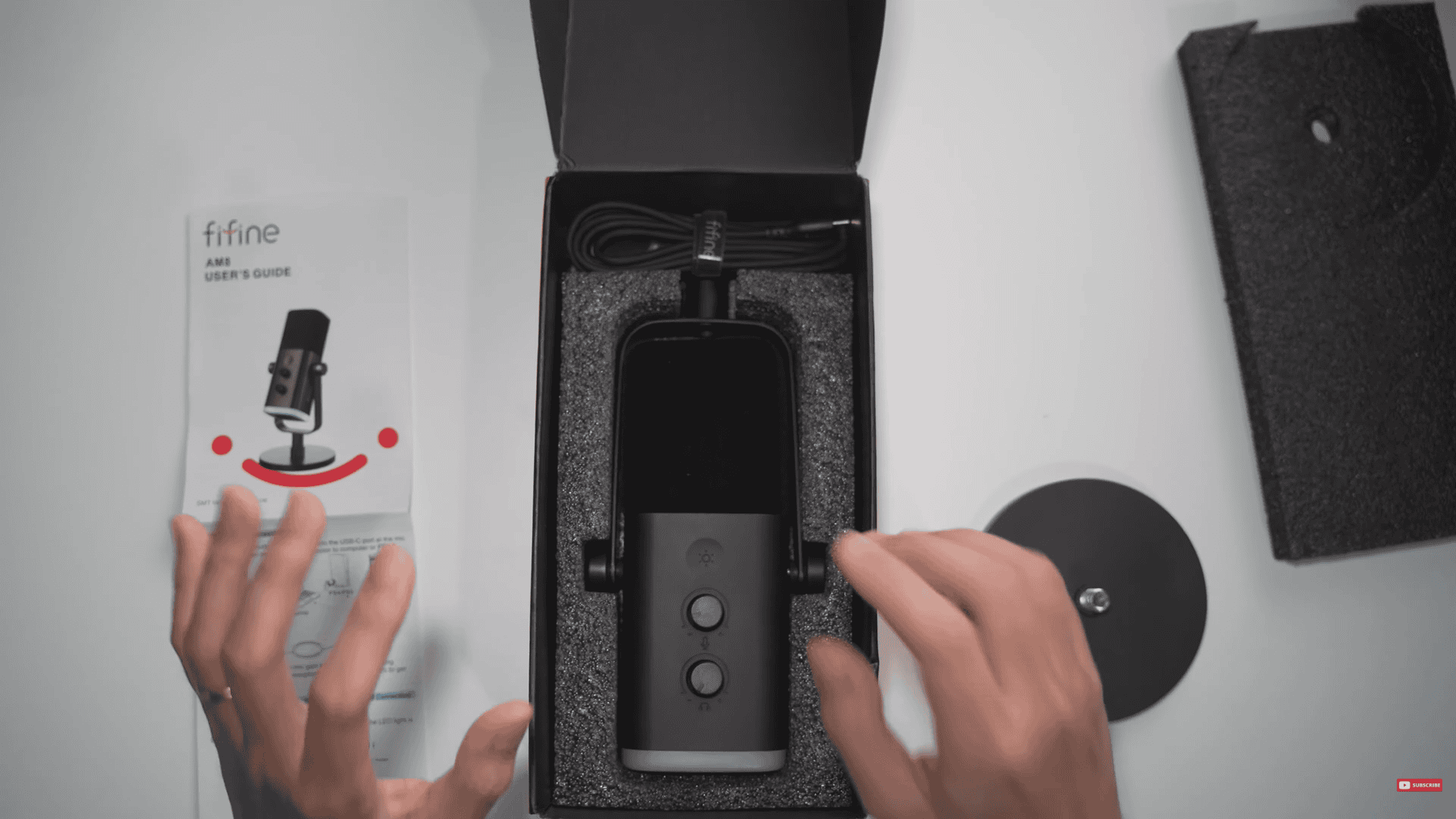
Unboxing the Fifine AM8 mic
Comparing the foam pop filters side by side of the AM8 and K658, it seems to me that the AM8 foam is marginally thicker, but the K688’s foam has more give to it. I don’t know if that has to do with the shape or the density of the material, but it seems to me that Fifine is really iterating these small upgrades over time.
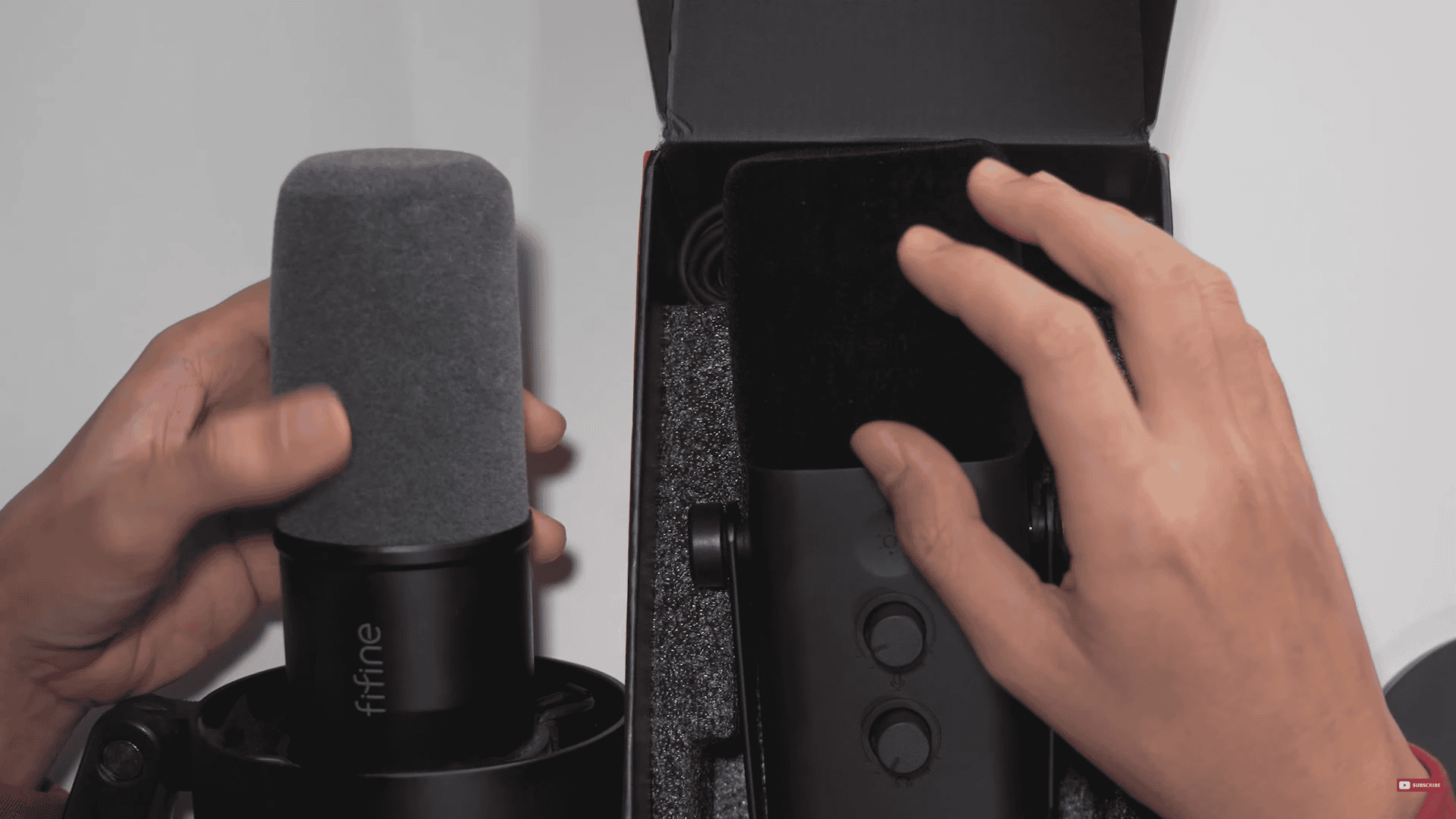
Fifine K688 on the left and AM8 on the right
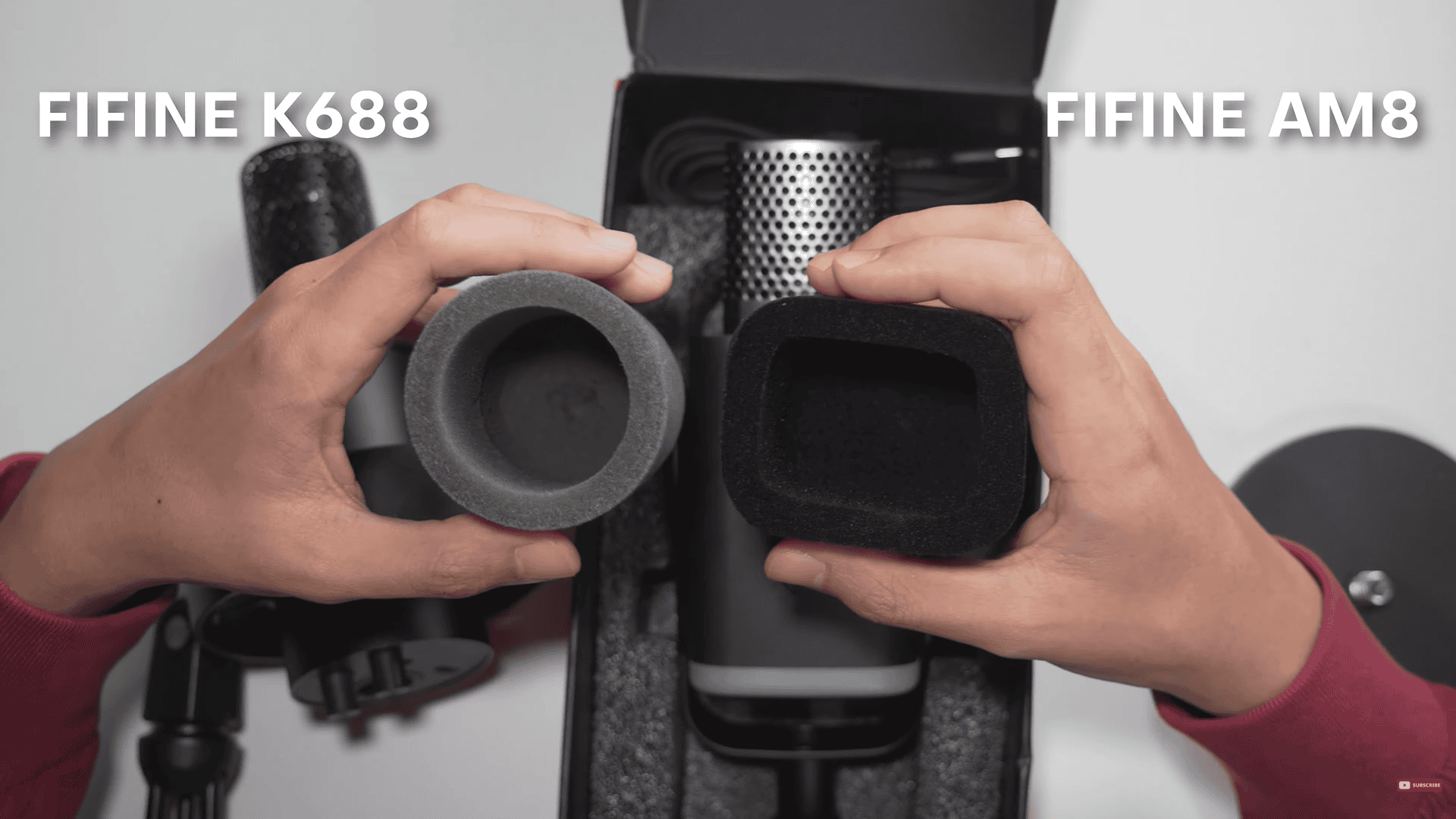
Comparing the two foam pop filters
The AM8 has one of the longest USB-C cables I have ever seen, which is almost two meters long. Meanwhile, the weight of the microphone is 399.5 grams, while the mount on its own is 180.5 grams. Together they weigh 580 grams, and that is hefty. I wouldn’t call that a light setup.
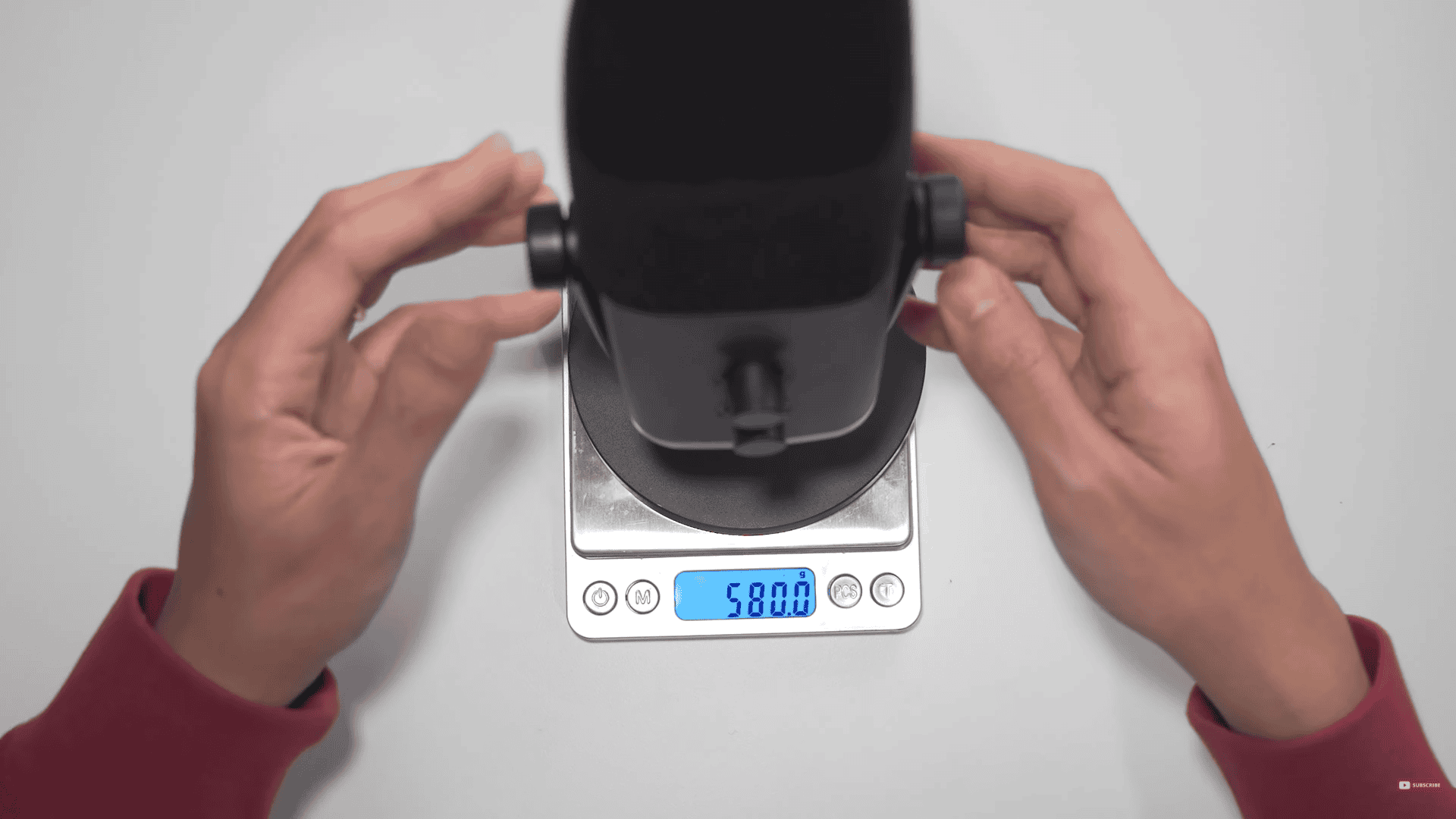
The AM8’s full weight
It’s got an RGB when tapped, changes its colors to red, yellow, green, sky blue, and blue. I think the RGB is tastefully done, and you can use it to complement your brand.
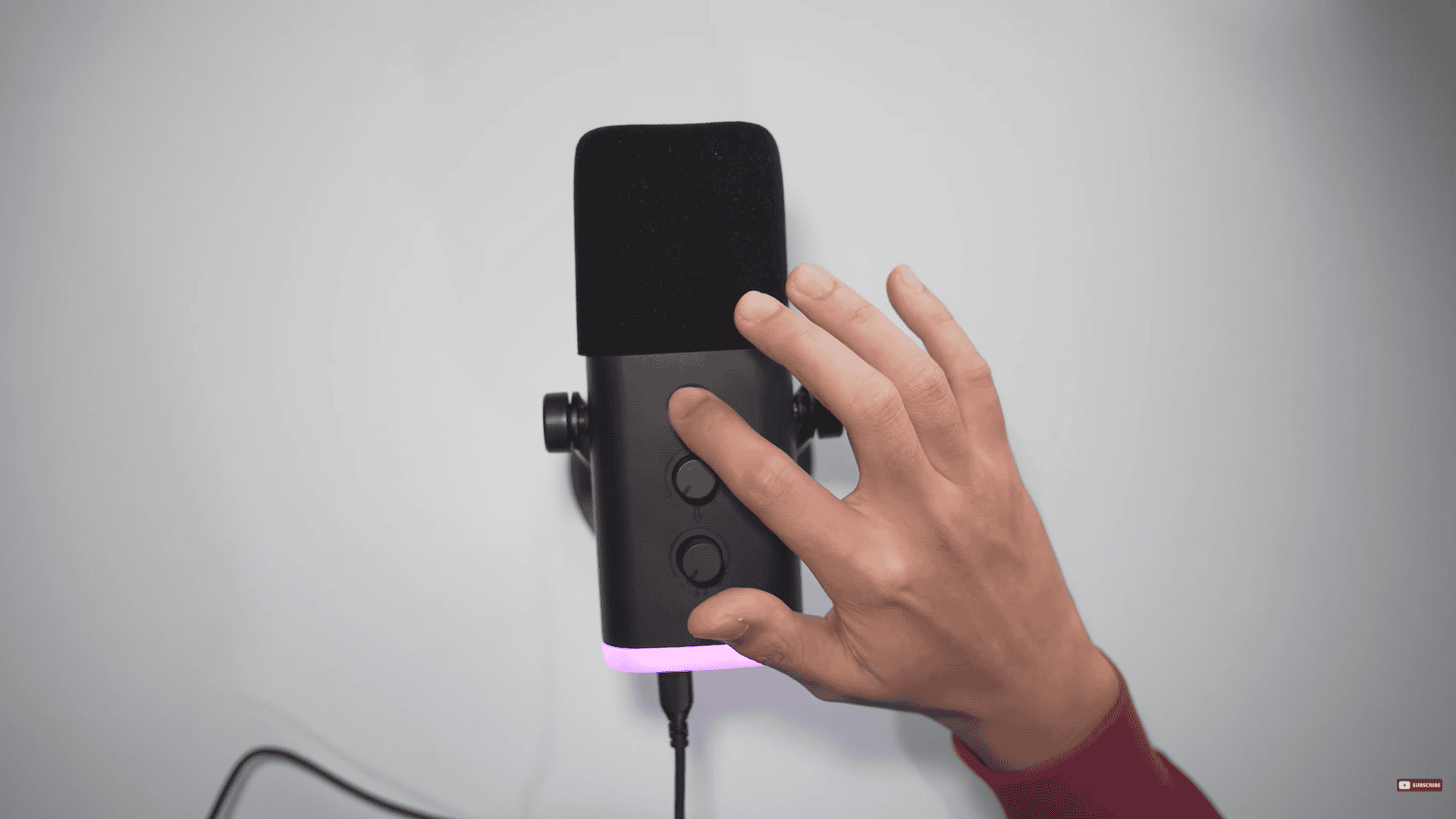
The RGB button
In the middle is the mic gain knob, and then at the bottom is the headphone volume knob. At the back, you have the 3.5 millimeter headphone jack, which is for small headphones, and then the classic USB-C Port. Finally, the mic also has a touch-sensitive mute button that is very convenient.
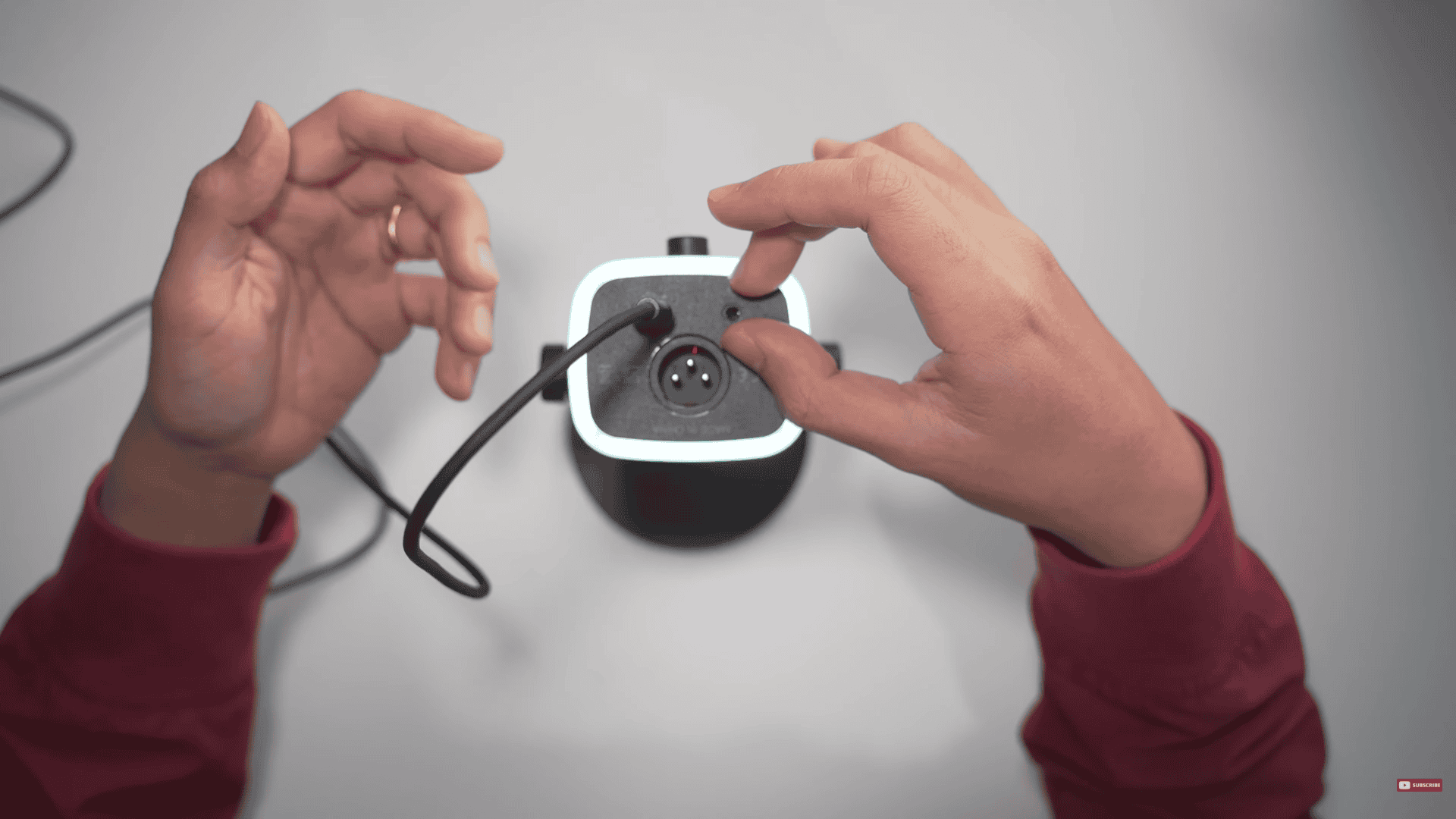
View from the bottom of the mic
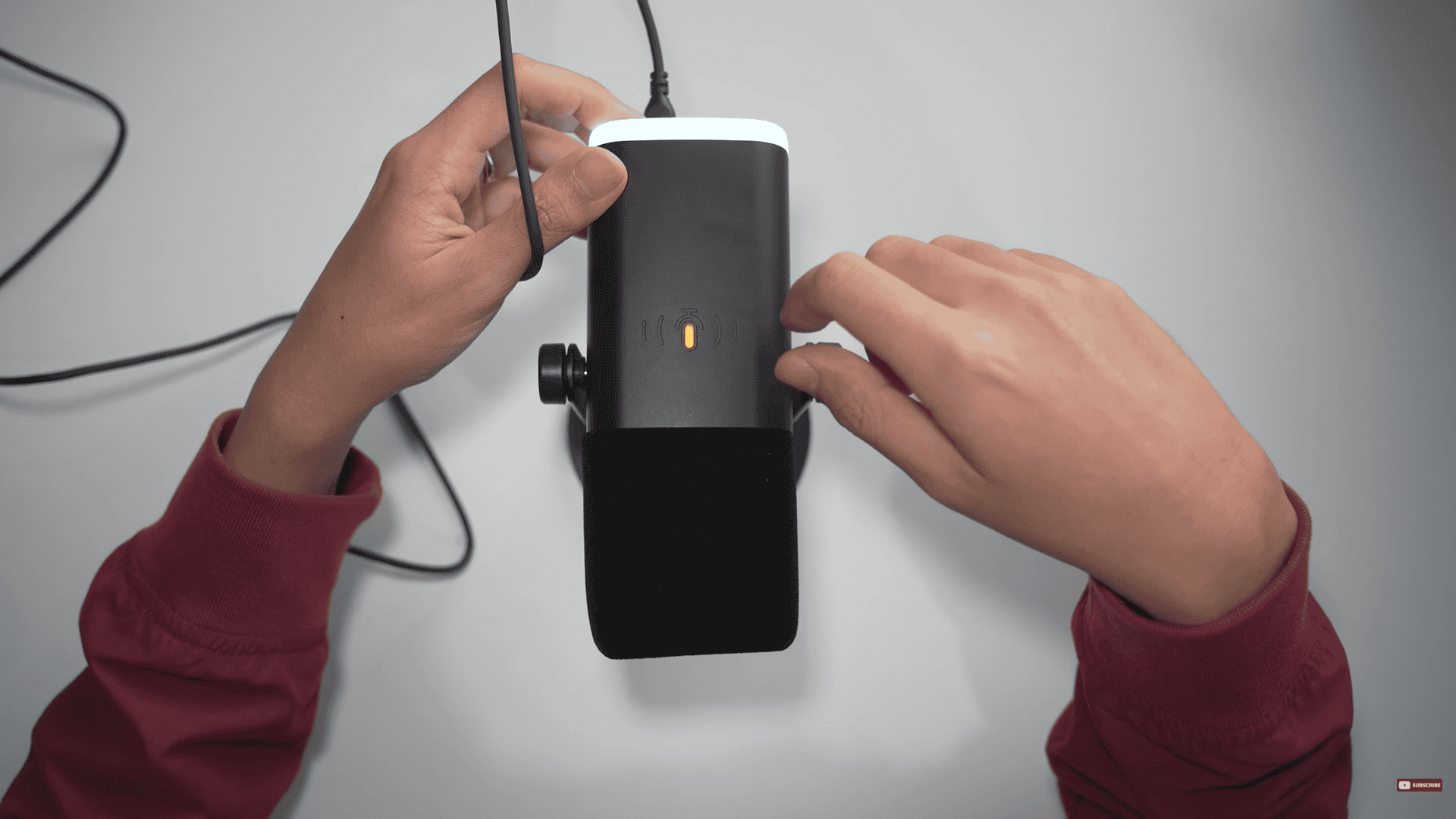
The mic’s touch-sensitive mute button
If this setup already looks promising to you, check out the Fifine AM8 on the link below:
https://link.davesoltura.com/fifineam8amazon
First Impressions
The first thing that I noticed about this mic is that it’s got a lot of gain. When I’m close to the mic, the audio is almost clipping, so I have to be very careful about my volume.
At three o’clock, you can definitely hear some of the background, but there’s not a whole lot of it. The mic doesn’t have a lot of self-noise, the off-axis rejection is excellent, and you have to be right in front of it to capture most of the audio.
Another thing to note about AM8 is that you need to use low impedance headphones to monitor yourself very clearly. If you use something like the DT770 Pros 250 ohms edition, you’ll still be able to hear yourself to a fair degree, but not reliably enough for you to hear the background noise.
The Fifine AM8 has a fairly smooth sound, a nice thick low end, and a mid-range. Trying out its XLR mode, it doesn’t sound that much different. As you’d expect from a proper preamp, it is a bit thicker than the USB version.
For the vast majority of people, you really wouldn’t need to buy a dedicated audio interface to power this because that’s essentially what a USB mic is, it’s a microphone with an audio interface jammed inside of it.
When you’re using it in XLR mode, everything stops working; the mute button stops working, and the RGB disappears. Eventually, you’re going to control it from the audio interface, but you can plug that USBC Cable in just so you get the RGB.
Pros & Cons of the Fifine AM8
Pros
1. Great plosive handling
This mic handles plosives like a champ compared to the Fifine K688. You might hear some of the air blasting through, but it’s not really distorting the audio. I think it handles plosives because of how thick the included foam windscreen is. The sides are roughly equal, but the tips themselves are vastly different. It’s applying roughly the same force to both of these pop filters.
2. Clean gain and signal-to-noise ratio
The second pro is that this mic has a lot of clean gain and a great signal-to-noise ratio. Even if you’re speaking quietly, your audio will still sound clean.
3. Excellent off-axis rejection
The third pro is that it has excellent off-axis rejection, that way it captures you and not what’s around you. However, that could also be the first con.
Cons to consider
1. Requires precise positioning
For the first con, you practically have to be right in front of the mic to sound your best, and just being slightly off makes a huge difference in your sound.
2. May require a separate USB cable
For me, this is the most concerning con, which is that you likely need to get your own USB 3.0 cable because the included cable might cause you to sound like a robot. This was already a concern with the included cable with the K688, and I was hoping that the cable that came with the AM8 would not have that problem. I do hope that Fifine works on this soon because, as far as I can tell, they have been listening to their customers to iterate on their products.
3. Not good for travelling
The last con is that the package is somewhat on the heavy end. The mic does weigh more than 500 grams, so it’s not the first mic that I’d think of for travel.
Final Thoughts/Recommendations
The Fifine AM8 is highly recommended for podcasters and streamers.
However, for voice actors, it’s a different story. Voice actors can definitely book professional projects with this mic, but if competing with other voice actors who are using more professional setups, then it’s going to be a tough challenge. Regardless, the Fifine AM8 is a mic that gives amazing value for its price.
Interested in purchasing the Fifine AM8? Click the link below: