

We’re going to talk about one of the most underrated pieces of home studio tech in the history of home studio voice acting: the Behringer UMC204HD.

Who is this for?
The Behringer UMC204HD is highly recommended for people moving up from their very first USB microphone. If you’re looking for your first serious interface on a budget, or if you’re a beginner seeking your first microphone, the Behringer UMC204HD is a good fit.
Its price point is budget-friendly and a step up from USB, making it commercially competitive. I wouldn’t call it high-grade, but it’s still professional level.
Top Reason for Buying It
A good reason for buying the Behringer is its price-to-performance ratio. It is a sub-$150 interface, and it is high value at the same time. It sounds great, with the noise floor incredibly low, especially if you’re coming from a USB microphone. The difference is definitely noticeable.
Why Step Up from a USB Mic?
In the same sense that phone cameras have very tiny sensors compared to mirrorless and DSLR cameras, USB microphones generally have weaker preamps compared to a dedicated interface.
Comparison to popular USB Mics
The popular Fifine K669B sounds great overall if you speak closely to it, but it tends to be noisy—it’s got a “sh” sound to it. Even the professional Rode NT USB or the AT2020 USB are fantastic microphones, but you just can’t beat physics, at least at this point in time. USB microphones are essentially microphones with interfaces jammed into them.
Disclaimer on USB Mics
Technically, you can get away with USB microphones. That’s how I personally started, and I got some commercial work doing that. But if I were to start over and I had the budget for the AT2020 USB Plus, which is more expensive than its XLR version, you’re paying a little extra for that stuffed interface in the USB microphone. I highly recommend going for the interface plus the XLR version.
Why Get an Interface Anyway?
I highly recommend getting the Behringer interface. It’s at the same price point as getting an expensive USB microphone, but instead of getting the USB deal, you’re getting an actual interface plus an XLR microphone for almost the same money.
Should You Choose the Budget-Friendly Behringer Interface or the UMC204HD?
If you’re looking to save money, consider the UMC22 or UMC202HD. The UMC22 is the most affordable option to achieve that signature Midas sound, which is identical to the UMC204HD. So, why opt for the more expensive model?
The primary reason to upgrade from the UMC22 or UMC202HD to the UMC204HD is the stereo/mono monitor button. Without this feature on the cheaper interfaces, you’ll only hear the monitor output in one channel—either the left or right ear—because the audio plays in stereo.
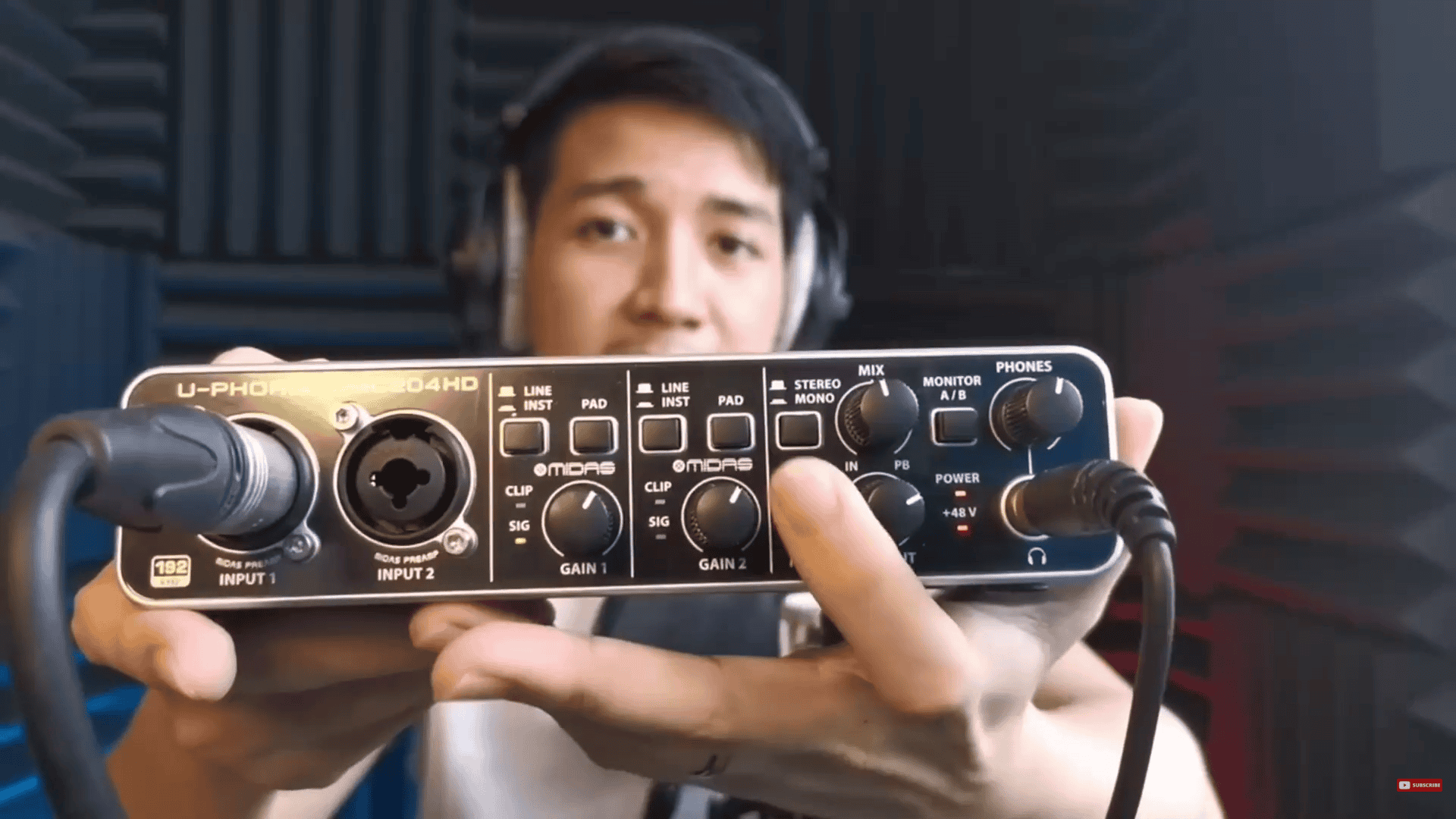
When recording, you typically capture audio in one channel. However, with the mono button on the UMC204HD, you can listen to that single channel through both ears. Does this feature significantly impact voice actors? Likely not.
If your goal is to achieve great sound quality on a budget, the UMC22 or UMC202HD will suffice. However, if you want a cost-effective interface that will serve you well for the next two to three years before needing an upgrade, the UMC204HD is the better choice.
Impressed by the Behringer UMC204HD’s clear audio and wallet-friendly price? See why it’s a must-have for budget-conscious creators—check the link below!
https://link.davesoltura.com/behringerumc204hd
Nice Features that Behringer UMC 204 has
A feature you’re going to get with this model that you’re not going to find with its cheaper siblings is the input/playback mix knob. This feature allows you to gradually switch between your monitor and your playback mix that you’re listening to.
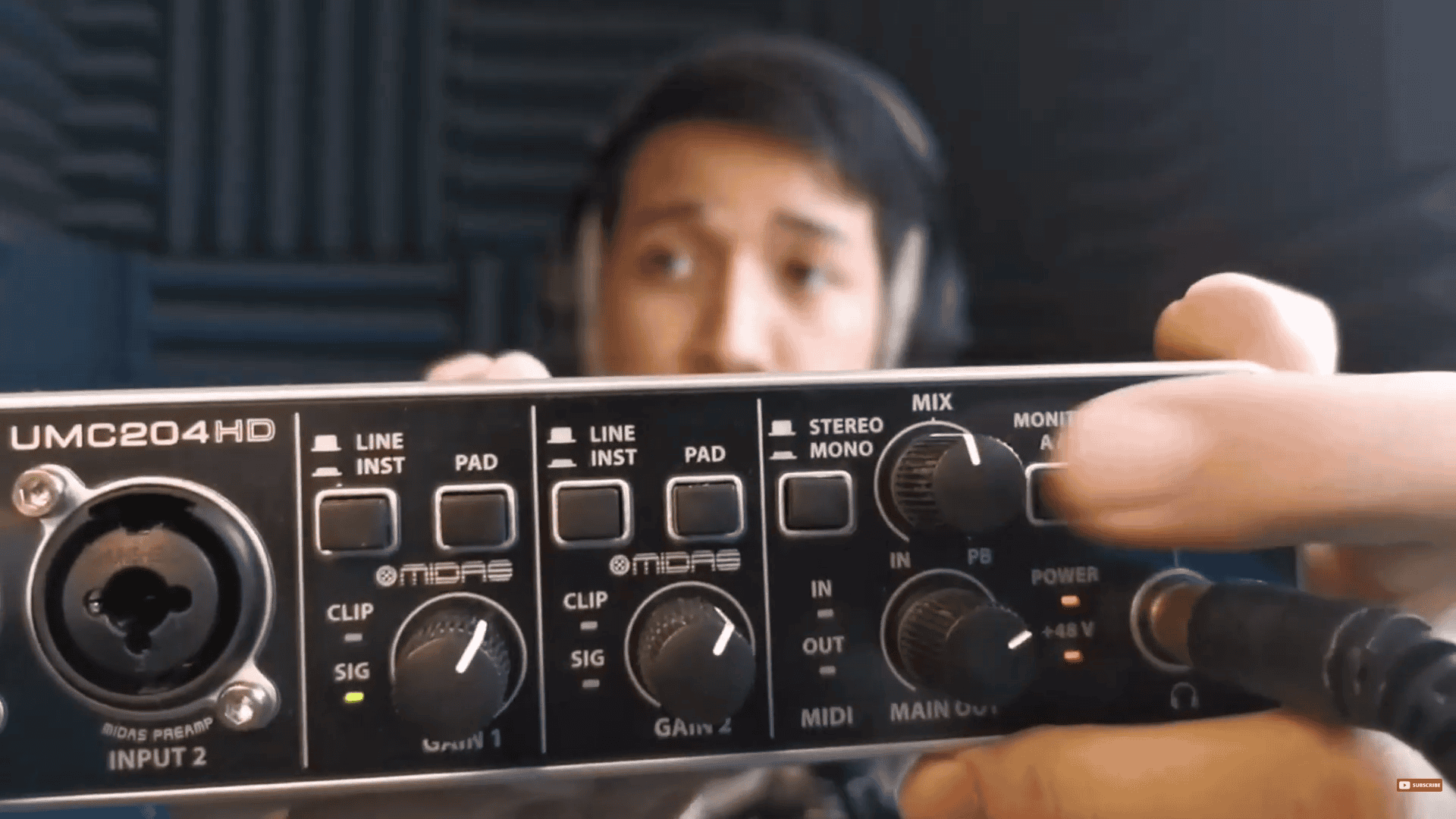
the input/playback mix knob
Another hidden feature most voice actors don’t notice that UMC204HD has is its headphone amps. Most voice actors looking to get a USB audio interface are usually doing so to move up from USB microphone quality to XLR. But a great feature of an interface is that it can drive hi-fi studio headphones, which generally don’t sound as great or even as loud if you plug them straight into your computer’s 3.5mm jack.
You really get the most mileage out of hi-fi headphones and that surround sound quality, hearing all the frequencies, when you plug them directly into a USB audio interface.
Motu M2 vs Behringer UMC 204 HD

Motu M2 at the top, Behringer UMC204HD at the bottom
Let’s talk about the elephant in the room, which is the Motu M2. The reason we’re going to talk about the Motu is because I believe it’s the first true upgrade from Behringer quality.
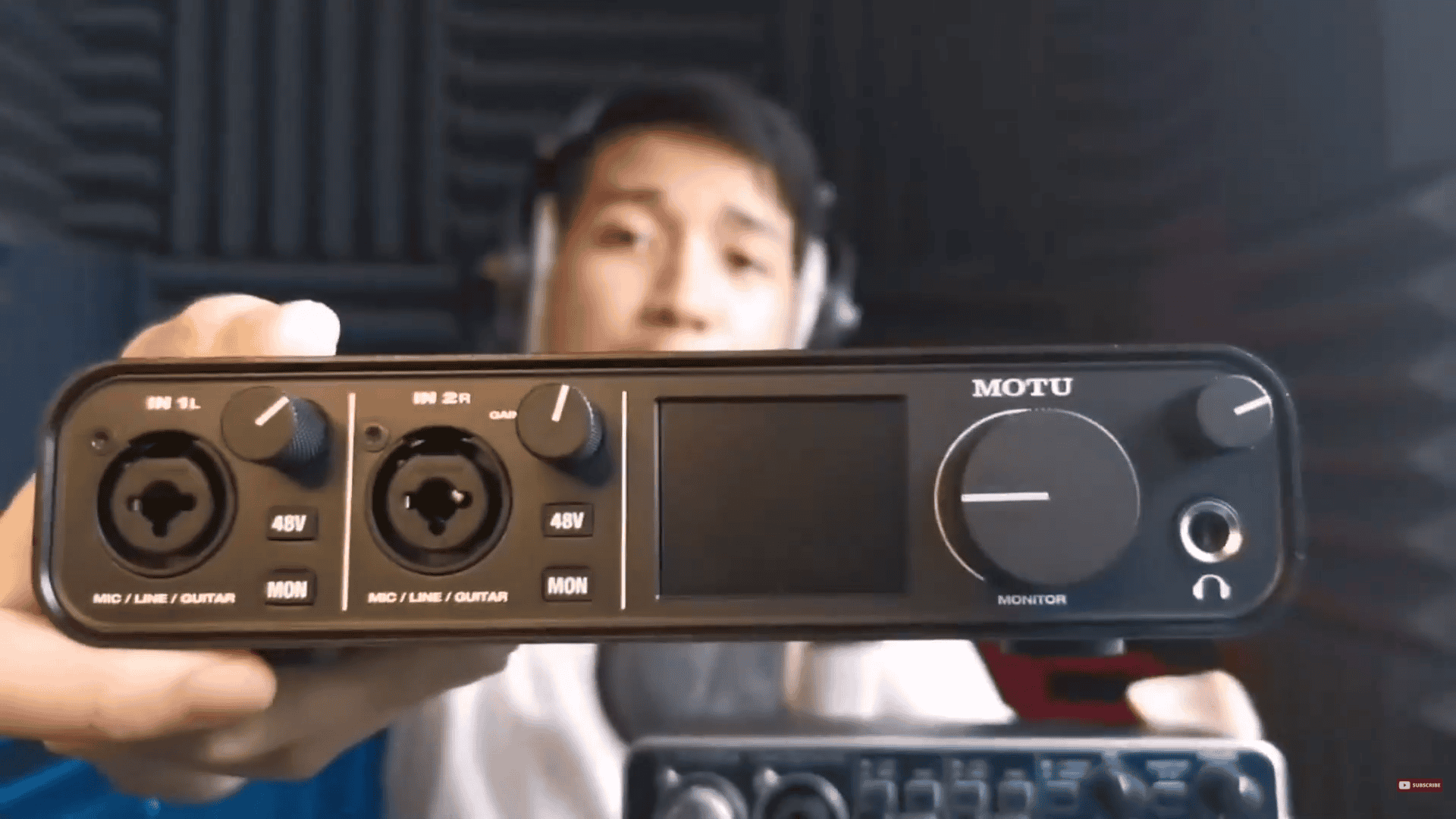
The Motu M2
The Focusrite is more or less in the same league as the Behringer, even if it is priced differently. You get all these bells and whistles for the same price as you would get the Focusrite. The Motu is definitely of better quality than the Behringer in terms of raw audio quality, but it is an extra $50 to $70.
An interesting detail I’d like to add is that the Behringer has the input/playback mix knob, whereas the Motu M2 doesn’t have it. You would need to get the Motu M4 to get that feature, which is pricier than the Motu M2.
Many people will attest that the Motu M2 is in a league of its own and is probably closer to a $400 interface in terms of the value it offers. So why go for the Behringer? Like I said, if you’re strictly on a budget, the Behringer is the way to go.
Bringing It Home
So, what’s the verdict? The Behringer UMC204HD is an incredible value-for-money interface that is worth more than it costs. The Behringer UMC204HD is for budget-minded voice actors who are looking to get truly professional-grade audio at the lowest cost possible and to have an interface with enough features to grow with them until they’re able to make their next upgrade.
Want professional-grade audio without breaking the bank? Get the Behringer UMC204HD today for incredible value! Check the link below to grab yours now!